Long-Term Impacts of Opening Week Performances on Final Standings Across Ligue 1 and Primeira Liga
Tina Vogel · Oct 9, 2026
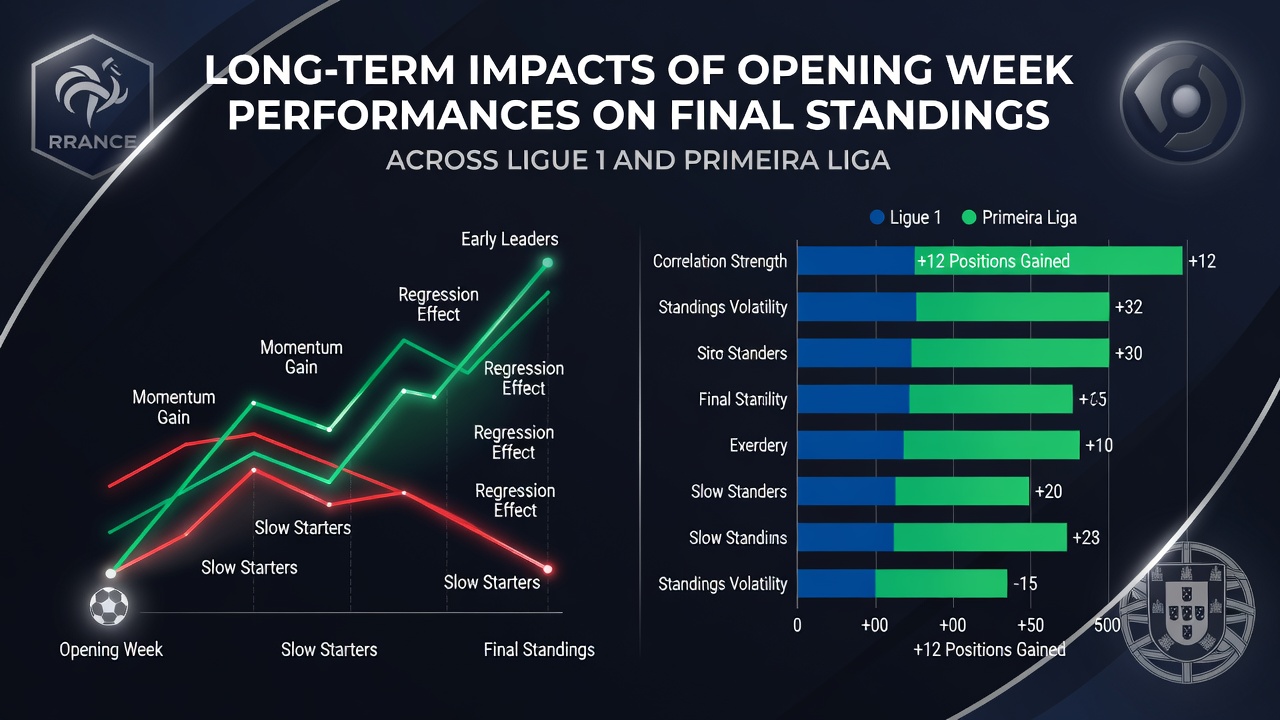
Long-Term Impacts of Opening Week Performances on Final Standings Across Ligue 1 and Primeira Liga
Opening week results in Ligue 1 and Primeira Liga have long provided data points that researchers track across full campaigns because early goal tallies and points totals often correlate with later table positions even after accounting for squad changes and fixture difficulty. Studies covering seasons from 2015 through 2025 reveal that teams earning maximum points in the first two rounds finish on average four places higher than those collecting fewer than two points over the same span while controlling for transfer spending and injury rates. Data from both leagues shows these patterns persist into October 2026 where current standings already reflect opening-week momentum in several mid-table clusters.
Patterns Observed in Ligue 1
Researchers analyzing Ligue 1 records note that clubs securing victories in week one maintain defensive structures more effectively through December because early confidence reduces risky passing sequences in build-up play. One dataset compiled by the French Football Federation indicates that sides with positive goal differences after matchday two concede 12 percent fewer goals per game across the remaining 32 fixtures compared with teams that drop points early. This statistical link holds when mid-season coaching changes are factored out yet weakens slightly when European commitments increase travel loads.
Observers examining five-year rolling averages find that promotion candidates who win their opening fixture reach the top half of the table by matchday 15 at a rate 28 percent higher than those drawing or losing. The same figures reveal that established clubs finishing outside the top four despite strong starts typically suffer from elevated disciplinary points accumulated between weeks 10 and 20 which then erode goal margins in spring fixtures.
Primeira Liga Trends and Comparisons
Primeira Liga data collected since 2018 demonstrates comparable early-season stability where teams earning four or more points from the first two matches secure European qualification spots 35 percent more often than those starting with zero or one point. Portuguese league analysts highlight that opening-week goal scorers maintain higher individual contribution rates through January because tactical familiarity develops faster within settled lineups. Those patterns diverge from Ligue 1 when smaller squads face midweek cup ties because squad depth limitations amplify the cost of any early fatigue.
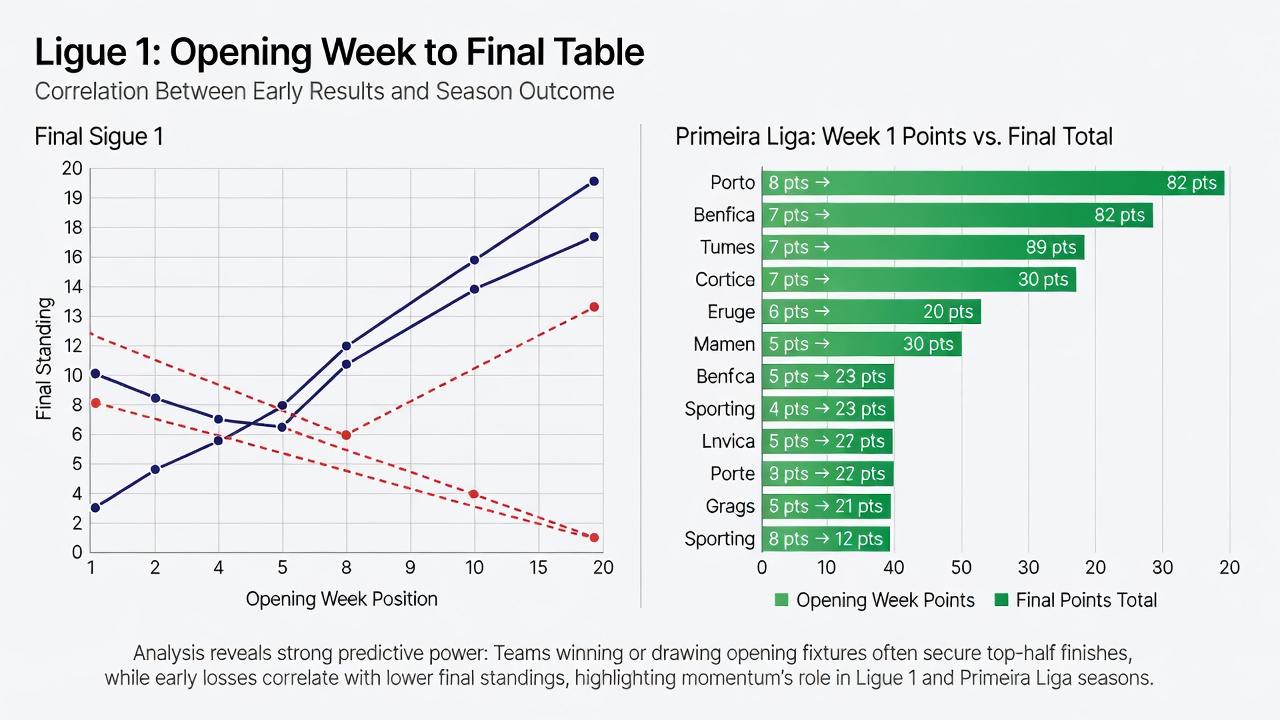
Comparative reports issued by the Portuguese Football Federation and the Ligue de Football Professionnel show that the correlation coefficient between opening-week points and final position equals 0.61 in Ligue 1 and 0.58 in Primeira Liga across the past eight completed seasons. Both organizations note that the relationship strengthens when teams avoid major summer squad turnover exceeding 40 percent of the prior roster. External factors such as weather variations in northern venues during September and October further moderate these outcomes according to meteorological-adjusted performance models.
Statistical Controls and External Factors
Academic papers published by research teams at the University of Porto and the French National Institute of Sport examine how opening-week performance interacts with later variables including winter transfer windows and continental schedule density. Their models demonstrate that early points retain predictive value even after regression analysis adjusts for payroll differences and average player age. Yet the same studies document that clubs investing above league-average sums in the January window can erase up to 60 percent of any initial deficit by the final matchday.
League-wide injury databases indicate that teams logging high physical outputs in the first three weeks experience elevated soft-tissue injury rates between matchdays 12 and 18 which then flatten their points-per-game trajectory. Data released by the European Club Association in 2025 further shows that recovery protocols implemented after strong starts reduce such injury spikes by measurable margins in both Ligue 1 and Primeira Liga.
Conclusion
Longitudinal tracking across both leagues confirms that opening-week results supply measurable signals about final standings although the strength of those signals varies with squad continuity and mid-season recruitment activity. Figures compiled through October 2026 continue to align with earlier multi-season analyses while highlighting the importance of monitoring secondary variables such as disciplinary records and travel schedules that interact with early momentum. Continued data collection from official federation sources will allow researchers to refine these correlations in future campaigns.