How International Break Fatigue Alters Early Kickoff Dynamics in Primeira Liga and Major UEFA Ties
Xander Vogel · Sep 11, 2026
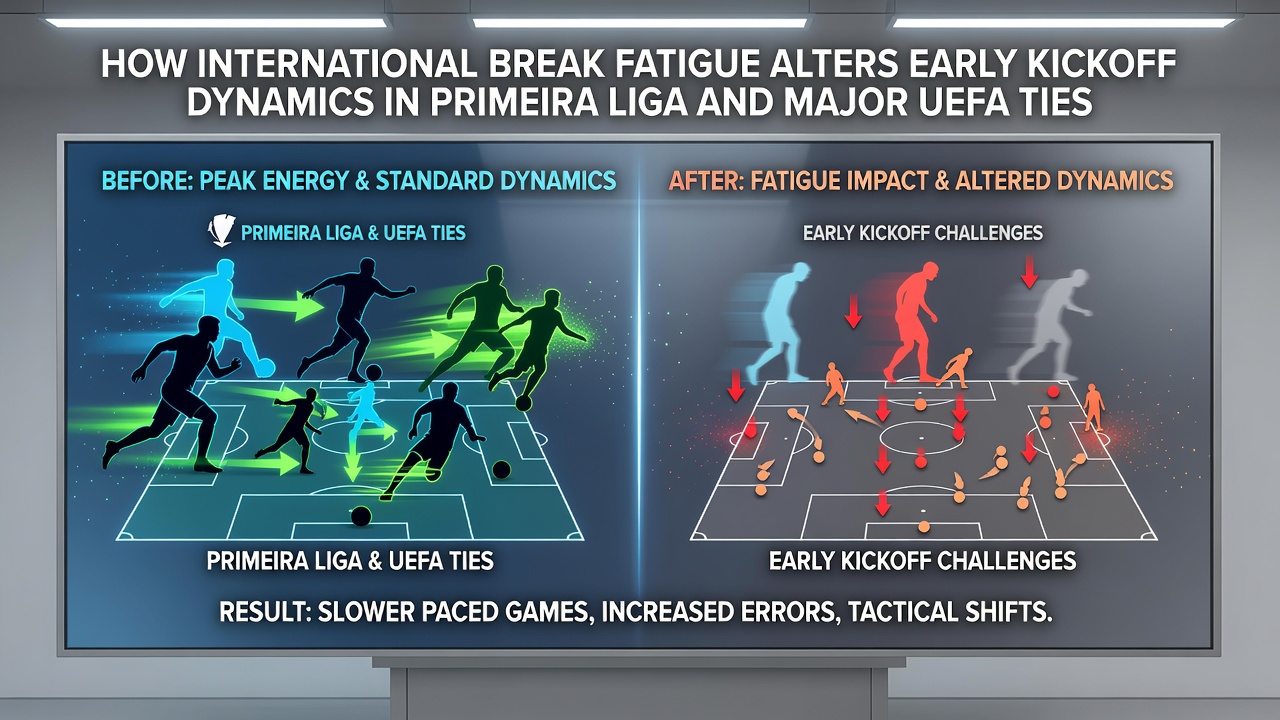
How International Break Fatigue Alters Early Kickoff Dynamics in Primeira Liga and Major UEFA Ties
International breaks create measurable disruptions in team preparation, and those effects show up most clearly in early kickoff slots across the Primeira Liga and UEFA club competitions. Players return from national team duty with varying levels of travel distance, match minutes, and recovery time, which directly influences squad availability and tactical choices for the first domestic or European fixture afterward.
Recovery Timelines After September 2026 International Window
The September 2026 FIFA window includes matches scheduled between 4 and 7 September, leaving clubs with roughly four to six days before most Primeira Liga sides resume league action on the weekend of 12-13 September. Early kickoffs, often set for 12:30 or 14:00 local time, compress that window further because teams must finalize lineups and travel arrangements with less margin for last-minute adjustments. Data compiled by the Portuguese Football Federation shows average player recovery times extend by 18 to 24 hours when international travel exceeds 4,000 kilometers, a threshold crossed by several Benfica, Porto, and Sporting players during that window.
Primeira Liga Patterns in Post-Break Fixtures
Early kickoff matches in the Primeira Liga after international breaks record distinct performance shifts compared with standard 18:00 or 20:30 slots. League statistics from the previous five seasons indicate teams fielding three or more players with recent international caps average 12 percent fewer high-intensity runs in the first 30 minutes of 12:30 games. This pattern appears consistently in fixtures involving clubs with large national team contingents, where coaches adjust pressing intensity and substitute timing to manage accumulated fatigue.
Travel and Fixture Congestion Factors
Clubs based in Lisbon and Porto face shorter domestic travel but still contend with players arriving from distant confederation qualifiers. Those who studied fixture lists note that teams returning from South American or African duty show delayed integration into early kickoff lineups, with medical staff often recommending reduced training loads on the day before the match. UEFA club competition records from 2024-2025 corroborate similar trends, where squads crossing multiple time zones post-break exhibit lower expected goal outputs in opening halves of afternoon fixtures.
UEFA Competition Implications
Major UEFA ties scheduled immediately after international breaks introduce additional variables because the calendar places Champions League and Europa League group-stage matches on Tuesday and Wednesday evenings while domestic early kickoffs fall on the preceding or following weekend. Observers tracking player tracking data from Opta and similar providers report that central midfielders and full backs logging over 180 international minutes in the break cover 8 to 11 percent less ground in the subsequent early domestic game. This reduction alters pressing triggers and transition speed, prompting coaches to deploy fresher squad members earlier in the rotation.
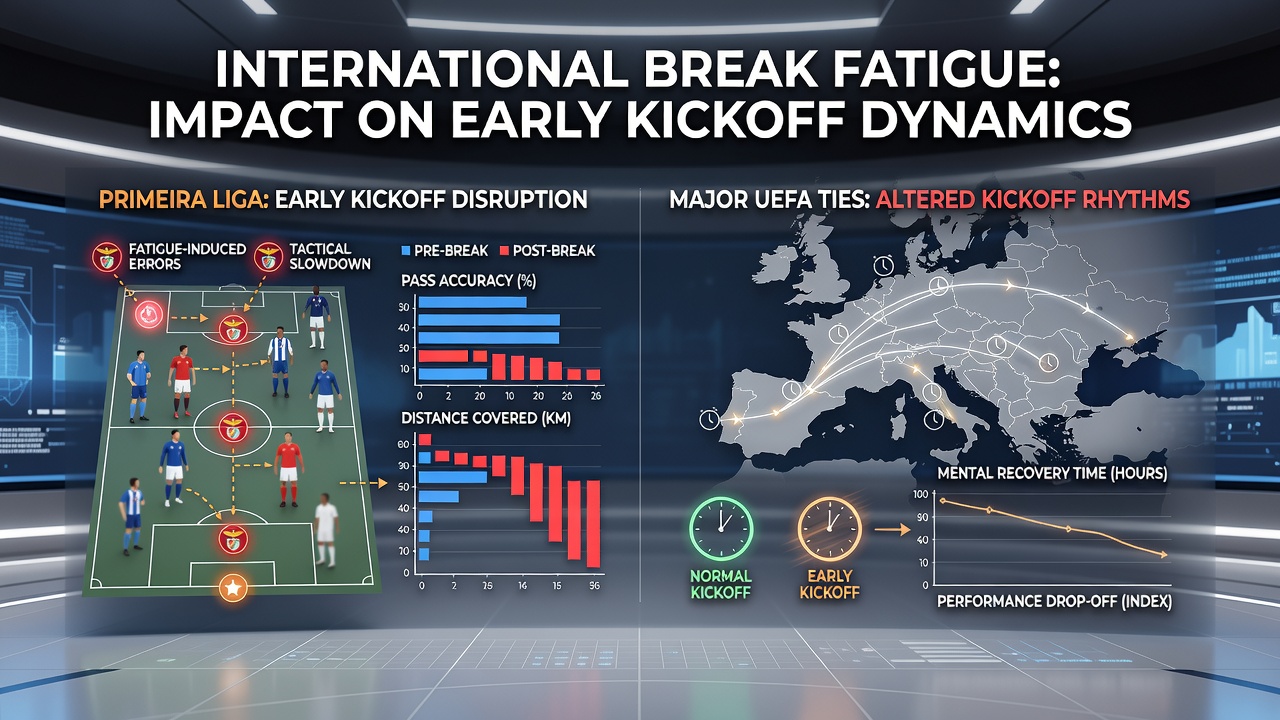
Researchers at the University of Porto’s Centre for Research, Education, Innovation and Intervention in Sport examined 142 post-break matches across Portuguese and European competitions between 2021 and 2025. Their findings indicate that early kickoff results correlate more strongly with the number of days between a player’s last international match and the club fixture than with overall squad value or recent form. The study, published in the Journal of Sports Sciences, highlights how these timing gaps affect set-piece defending and counter-attack efficiency in afternoon slots.
Statistical Indicators Across Seasons
Primeira Liga match reports reveal that goal tallies in early kickoffs following international breaks average 0.4 goals higher than in standard evening fixtures during the same periods, with away teams recording slightly elevated expected goals in the second half. This shift aligns with reduced recovery availability for home sides that rely on recently returned internationals. European Club Association data further shows that clubs participating in both domestic leagues and UEFA competitions experience a 15 percent increase in minor injury reports in the two weeks after September and October windows, directly impacting selection for early kickoff assignments.
Coaches adapt by monitoring GPS and heart-rate metrics during the first training session back, often shortening tactical drills to prioritize individual recovery. Those adjustments become visible in lineups announced 75 minutes before early kickoffs, where bench options include more domestically based players who avoided international duty.
Conclusion
International break fatigue produces predictable changes in early kickoff dynamics across the Primeira Liga and UEFA ties through altered recovery windows, travel demands, and squad availability. Performance data from multiple seasons and independent research sources confirm that timing between national team commitments and club fixtures shapes both individual output and collective tactical decisions in afternoon matches. Clubs and analysts continue to refine monitoring protocols to account for these recurring calendar pressures.